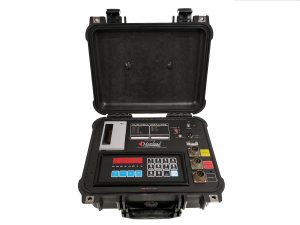
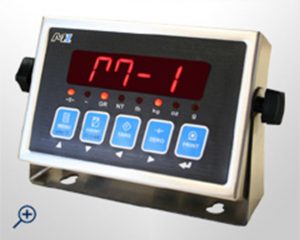
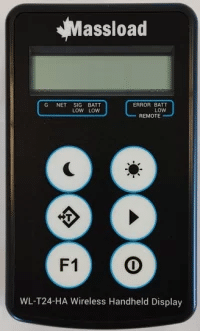
Engineering isn’t marketing. We don’t claim to offer “the best” weighing systems—we provide properly engineered measurement solutions for applications where standard approaches consistently fail. Our expansion into Ohio targeted the region’s concentration of manufacturing and OEM operations with complex measurement requirements beyond the capabilities of conventional scale technology.
Our approach differs fundamentally from catalog-driven suppliers:
- We analyze the complete measurement environment—not just the object being weighed
- We engineer force transmission paths—not just sensing elements
- We consider thermal effects on the entire mechanical system—not just the load cell
- We evaluate vibration profiles across operating frequencies—not just static loading
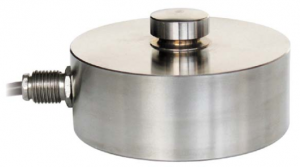
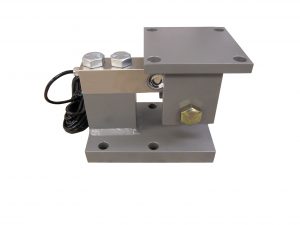
Load Cells and Weigh Modules
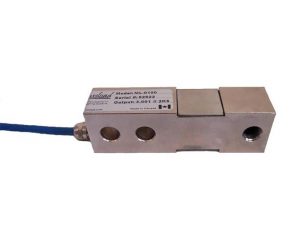
Load cells aren’t merely “sensors”—they’re precision mechanical structures designed to convert applied force into electrical signals while maintaining structural integrity. Their selection and implementation involve multiple engineering disciplines:
- Mechanical Considerations: Force vector analysis, stress concentration mapping, deflection characteristics, material fatigue resistance, thermal expansion compatibility
- Electrical Factors: Strain gauge pattern optimization, temperature compensation networks, signal conditioning requirements, excitation regulation, shield effectiveness
- Environmental Protection: Sealing methods for specific contaminants, material compatibility with process exposures, condensation prevention, cable entry protection
- Mounting System Design: Articulation requirements, self-centering mechanisms, thermal isolation, vibration damping, overload protection
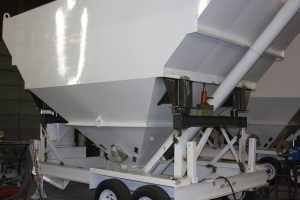
Tank, Hopper, and Process Batching Systems: Precision Material Management
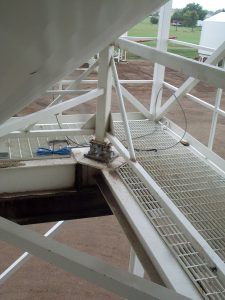
Vessel weighing presents complex structural interactions rarely addressed in standard load cell calculations. Theoretical vessel support models assume ideal conditions almost never achieved in actual installations:
- Vessel shells deflect under load, creating non-vertical force components
- Support structures experience torsional effects under eccentric loading
- Piping connections introduce variable constraint forces
- Thermal gradients cause differential expansion between components
- Foundation settling creates progressive misalignment
- Agitation generates dynamic force vectors absent in static analysis
Our vessel weighing systems integrate mechanical engineering with signal processing to overcome these constraints:
- Custom-designed self-aligning mounting assemblies
- Articulated piping connections with controlled stiffness
- Thermal expansion compensation through floating restraints
- Vibration isolation tuned to specific agitation frequencies
- Adaptive digital filtering based on process states
- Multi-point calibration with polynomial correction
Wireless Transmitters and Scale Indicators
The most precise measurement is worthless if signals can’t reach control systems reliably. Industrial environments present significant challenges to signal integrity:
- EMI/RFI interference from variable frequency drives and switching power
- Physical barriers requiring signal routing through complex paths
- Moisture and contaminants affecting connection reliability
- Ground potential differences between equipment locations
- Power fluctuations affecting signal conditioning performance
Our instrumentation systems address these challenges through engineered solutions:
- Adaptive power management for battery optimization
- Mesh networking capability for extended range
- Protocol-specific implementations without generic converters
- Isolated power supplies with transient protection