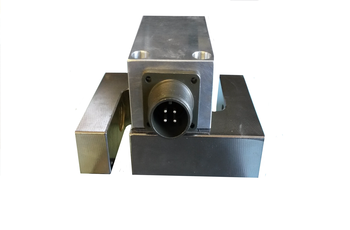
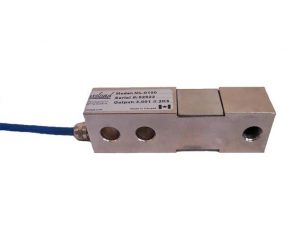
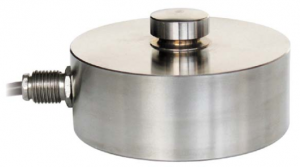
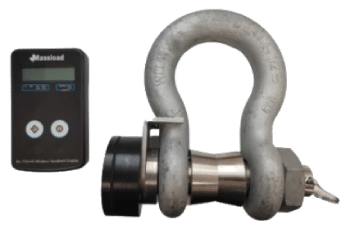
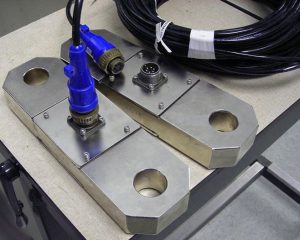
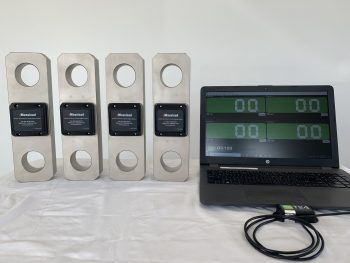
While custom-engineered solutions provide optimal performance for complex applications, many OEM integrations can successfully utilize standard load cell configurations when properly selected and implemented. These standardized options offer several advantages:
Cost Efficiency: Standard load cells typically cost less than fully custom designs, making them attractive for production equipment where price sensitivity influences market competitiveness.
Reduced Development Time: Pre-engineered solutions eliminate design and validation cycles, accelerating your time-to-market for equipment requiring basic weighing functionality.
Established Performance Characteristics: Standard cells come with documented performance parameters and established track records, providing predictable behavior under specified conditions.
The key lies in selecting appropriate standard configurations for your specific application requirements. We offer several standard options that have proven successful in OEM integrations.
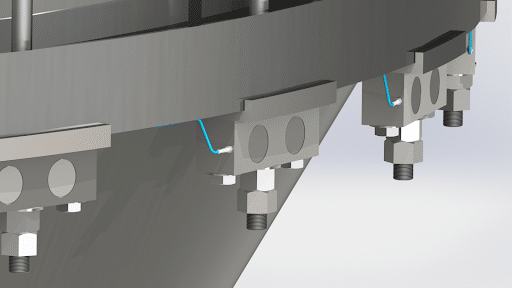
Even with standard cells, proper implementation remains critical. Our application engineers can evaluate your equipment design to recommend appropriate mounting methods, protection systems, and signal conditioning to maximize performance and reliability of standard cells in your specific operating environment.
What Does FSO Mean for a Load Cell?
Full Scale Output (FSO) represents a critical specification frequently misunderstood or oversimplified in load cell selection. It’s not just a number—it’s the foundation of your entire signal chain design.
FSO specifies the electrical output at rated capacity, typically expressed in mV/V (millivolts output per volt of excitation). Standard strain gauge load cells typically produce 2-3 mV/V FSO, meaning that with 10V excitation, your raw signal maxes out around 20-30mV at full load. Think about that—your critical process control might be riding on a 20mV signal in an environment filled with motors, drives, and switching power supplies generating electrical noise measured in volts.
The practical implications hit your equipment design in several ways:
- Signal-to-Noise Ratio: Lower FSO means weaker signals more susceptible to electrical noise—particularly problematic in Texas manufacturing environments with significant EMI from motors and drives.
- Excitation Tradeoffs: Higher excitation voltage increases signal strength but also increases power consumption and heat generation that affects zero stability.
- Amplification Requirements: Lower FSO signals require more amplification, potentially introducing additional noise and drift sources in your signal chain.
- Resolution Limitations: Lower absolute signals reduce effective resolution, particularly at the low end of the measurement range where many processes operate.
For Texas OEMs developing equipment with integrated weighing capability, this isn’t theoretical—it directly impacts your measurement stability in field conditions where electrical noise environments vary dramatically from your R&D lab.
What Makes OEM Load Cells the Most Accurate?
The accuracy question reveals a fundamental misconception in load cell selection. The “most accurate” cell isn’t the one with the best specs on paper—it’s the one that maintains specified performance under your actual operating conditions.
Laboratory-grade load cells touting 0.01% linearity often drift to 1% or worse when subjected to the thermal cycling, vibration, and off-axis loading inherent in equipment operation. Meanwhile, properly engineered OEM cells with seemingly modest 0.1% specifications maintain their performance despite these real-world challenges.
What drives this difference? Several critical factors:
- Application-Specific Strain Pattern: Custom OEM cells utilize strain gauge configurations optimized for your specific loading conditions rather than generic commercial patterns designed for pure axial loading.
- Mechanical Integration Design: Force transmission paths engineered specifically for your mounting constraints, eliminating parasitic forces from thermal expansion differences and structural deflection during operation.
- Material Selection Beyond Specs: Rather than standard alloys, custom OEM cells utilize materials selected specifically for fatigue resistance under your cyclic loading patterns and corrosion resistance for your specific environmental exposures.
For Texas manufacturers requiring consistent measurement in equipment subjected to field conditions, these application-specific design factors typically deliver more reliable performance than cells with impressive laboratory specifications but generic design parameters.